
Digital Product Passport Is Coming: Check Your Company's Readiness in 5 Key Steps
Deadlines are approaching. The Digital Product Passport (DPP) is no longer just a concept being discussed at the EU level; it is becoming a regulatory reality that will redefine how we produce, distribute, and sell products.
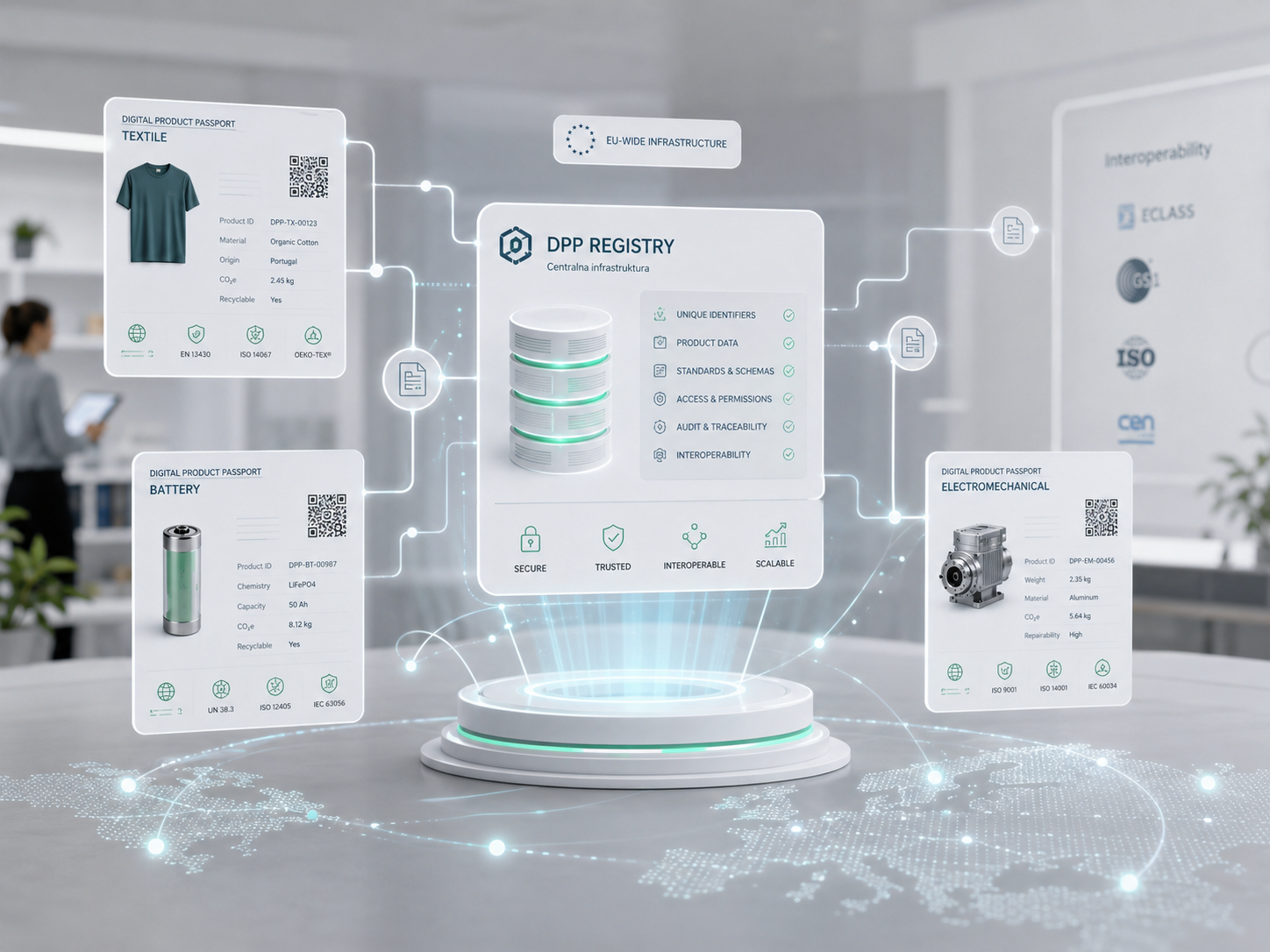
Although batteries are the first in line, the regulation will soon cover the textile industry, construction materials, furniture, electronics, and chemicals.
Many companies mistakenly assume that having PDF technical datasheets or basic ERP records is sufficient preparation. Unfortunately, that is not the case. DPP requires structured, interoperable data and transparency across the entire supply chain—from raw materials to recycling.
Are you truly ready for 2027?
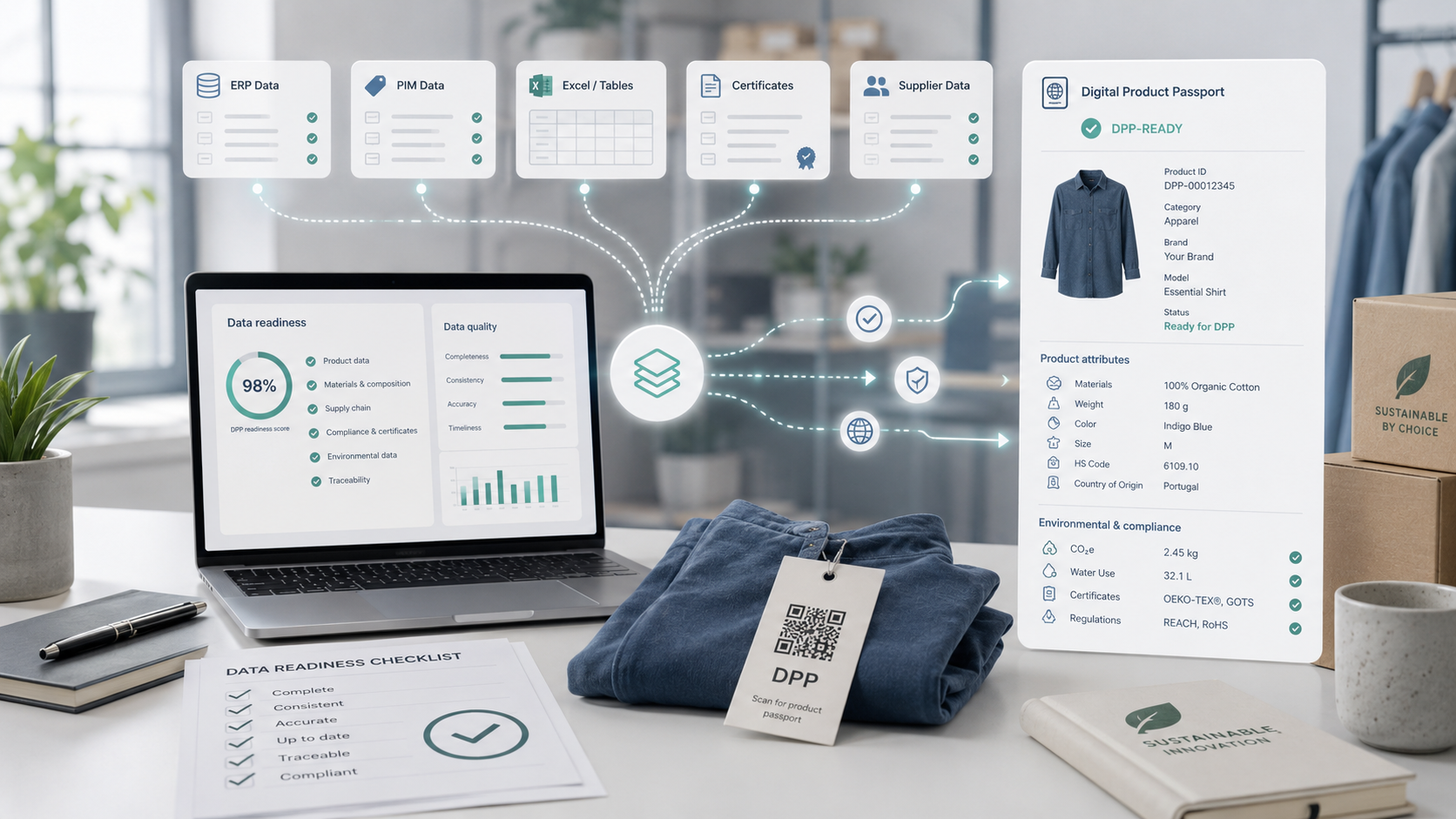
We created this self-check list to help you immediately assess the state of your organisation. If you cannot confidently answer “YES” to most questions, it is time for urgent process adjustments.
1. Product and Material Data
The foundation of the Digital Product Passport is data. Without clean and accurate data, technology becomes useless.
Do you have unique identifiers (GTIN, SKU, or standardized internal codes) assigned to all products and components?
Do you possess precise data on the origin of all materials, the percentage of recycled content, and the CO₂ footprint for each product?
Are certificates (compliance documentation, eco-labels) centralised, digitised, and valid?
Do you have an automated process for validating the accuracy of incoming data?
2. Supply Chain and Suppliers
Your product passport is only as good as the data provided by your suppliers.
Do you have defined sustainability and transparency criteria for supplier selection?
Can your suppliers provide data in a standardised, machine-readable format (Excel template, XML, API), instead of scanned PDF documents?
Is there a clear procedure for situations where a supplier cannot provide required information about chemical composition or origin?
Are your supplier contracts updated with clauses requiring mandatory data delivery for DPP?
3. Internal Processes and Responsibility
DPP is not just an IT responsibility. It is a strategic topic that requires collaboration across procurement, production, quality, and sales.
Do you know exactly who (by name) is responsible for the quality and maintenance of master data in your company?
Do you have an established workflow: supplier sends data → internal team validates → data is entered into the system?
Do you have a policy for regular data updates in case of recipe, material, or supplier changes?
4. Technological Infrastructure
Manual data entry into spreadsheets is no longer a sustainable business model.
Is your ERP or PIM system ready to accept new sets of attributes (LCA, recyclability, repair instructions)?
Are you planning integration with external platforms via API?
Are you aware that, for the EU market, data will need to be semantically interoperable and multilingual?
5. Strategic Advantage
Do you view DPP only as a legal obligation, or as an opportunity for market differentiation?
Are you prepared to use transparency to build stronger customer trust?
Do you have a plan for communicating the sustainability of your products to partners and consumers through digital channels?
Self-Check Results
If you answered with uncertainty or negatively to most questions, you are not alone. The majority of manufacturing and trading companies—ranging from small businesses to large enterprises—face the same challenge: how to bridge the gap between the current state of data and the strict requirements of EU regulation.
The solution is not panic, but a structured approach.
A Complete Solution: From Consulting to Software
Our approach to DPP implementation is unique on the market because we offer an end-to-end solution. We do not leave you with a list of obligations; we guide you all the way to success.
Through our Circular Economy service, we prepare your organisation by:
Mapping material flows: Identifying exact sources and destinations of your materials.
Standardising data: Aligning your databases with Ecodesign, ESPR, and CSRD requirements.
Conducting GAP analysis: Detecting precise gaps across ERP, production, and procurement.
Educating teams: Creating an internal culture that understands the importance of data.
Once the processes are set, we ensure technological implementation.
Our Digital Product Passport software (digitalnaputovnicaproizvoda.hr) enables easy generation, management, and sharing of passports — designed to be scalable and easy to use, regardless of company size or industry.
Do Not Wait Until the Last Moment
Regulatory deadlines are fixed, and the process of collecting and cleaning data takes months. Companies that begin preparations today will have a crucial competitive advantage on the European market tomorrow.
Turn regulatory obligation into business strength. Request expert consultation and learn how your organisation can implement the Digital Product Passport smoothly and efficiently.
Click here to request a consultation: