
Is Your Product Data Ready for the Digital Product Passport?
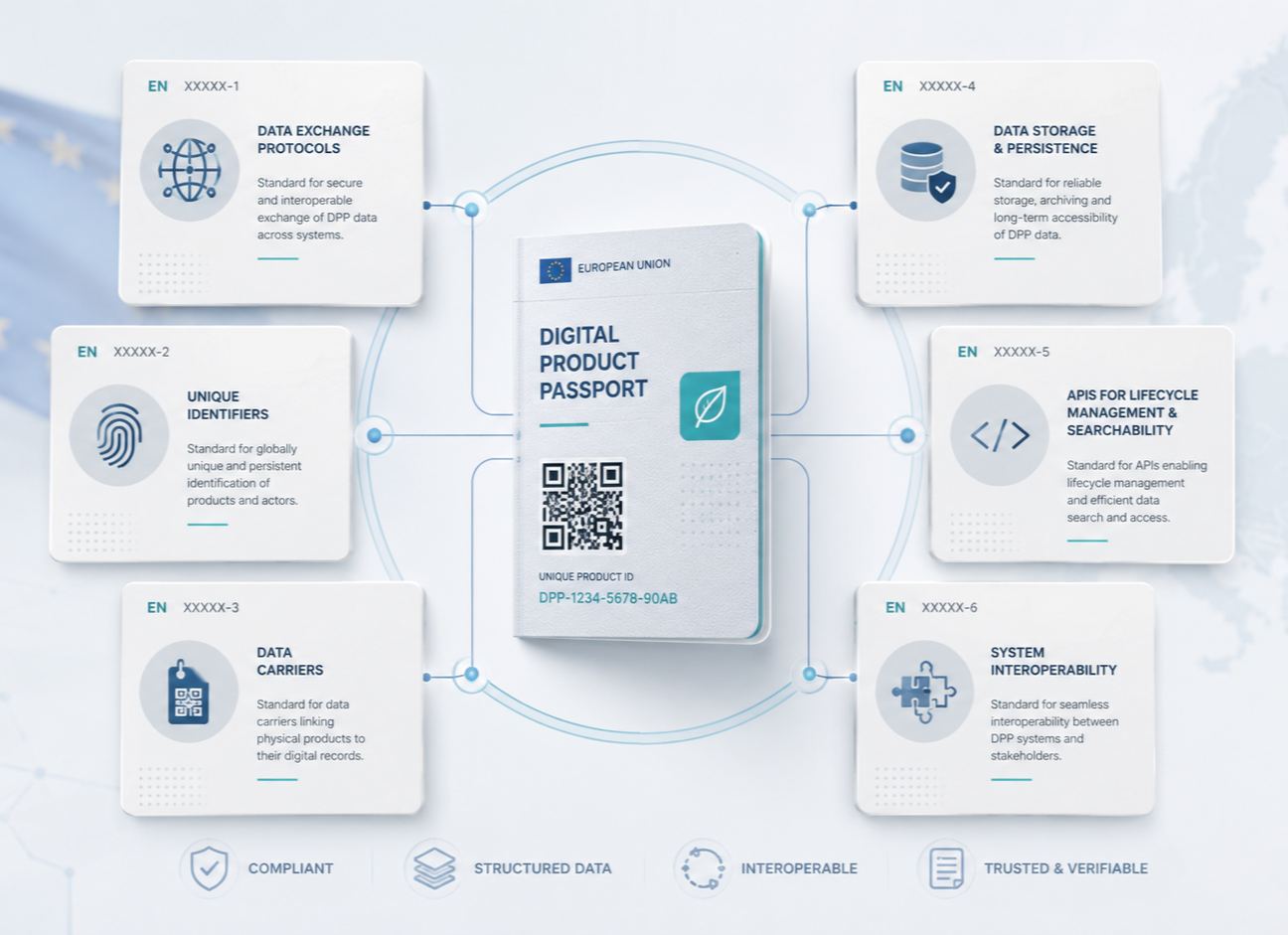
The Digital Product Passport is moving closer to practical implementation. Following the publication of the first European standards for DPP, it is becoming increasingly clear that business preparation will not only be about choosing a technology solution or placing a QR code on a product.
For many businesses, the real question is now much more practical: is our product data ready for the Digital Product Passport?
The DPP cannot function properly if data is incomplete, inconsistent, outdated or scattered across different systems and documents. That is why preparation for the Digital Product Passport should begin with a review of existing data, not only with the final selection of a software solution.
DPP Starts with Data, Not a QR Code
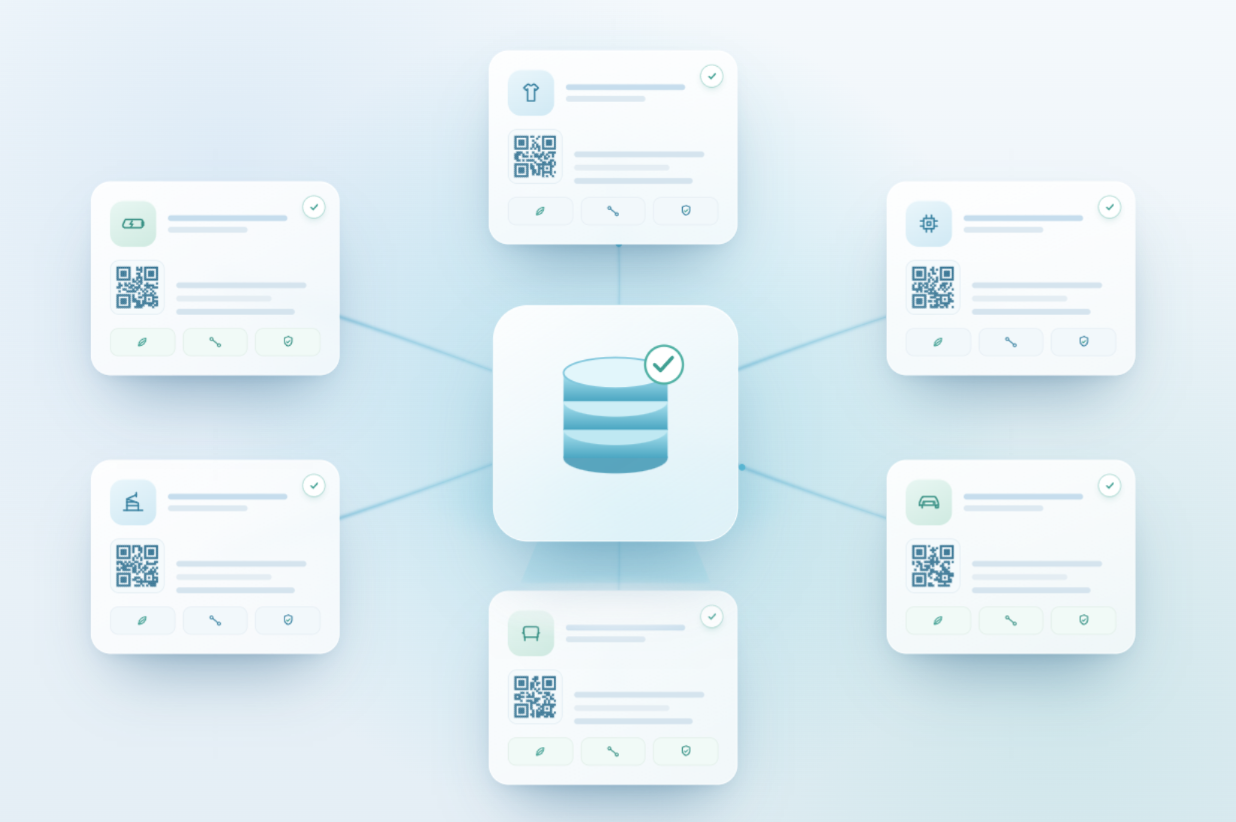
When people talk about the Digital Product Passport, QR codes, digital records and platforms are often mentioned first. While these elements are important, they are only the visible part of the system.
Behind every Digital Product Passport is data.
This may include basic product information, technical characteristics, composition, materials, certificates, origin, repairability, maintenance, recycling information, supplier data and other elements depending on the industry and product type.
If this data is not available, accurate and structured, the DPP becomes just another document that is difficult to maintain. If the data is properly prepared, the Digital Product Passport can become a useful tool for compliance, transparency and better product control.
Where Is Product Data Usually Located?
In many businesses, product data already exists, but it is not always organised in a way that is ready for the DPP.
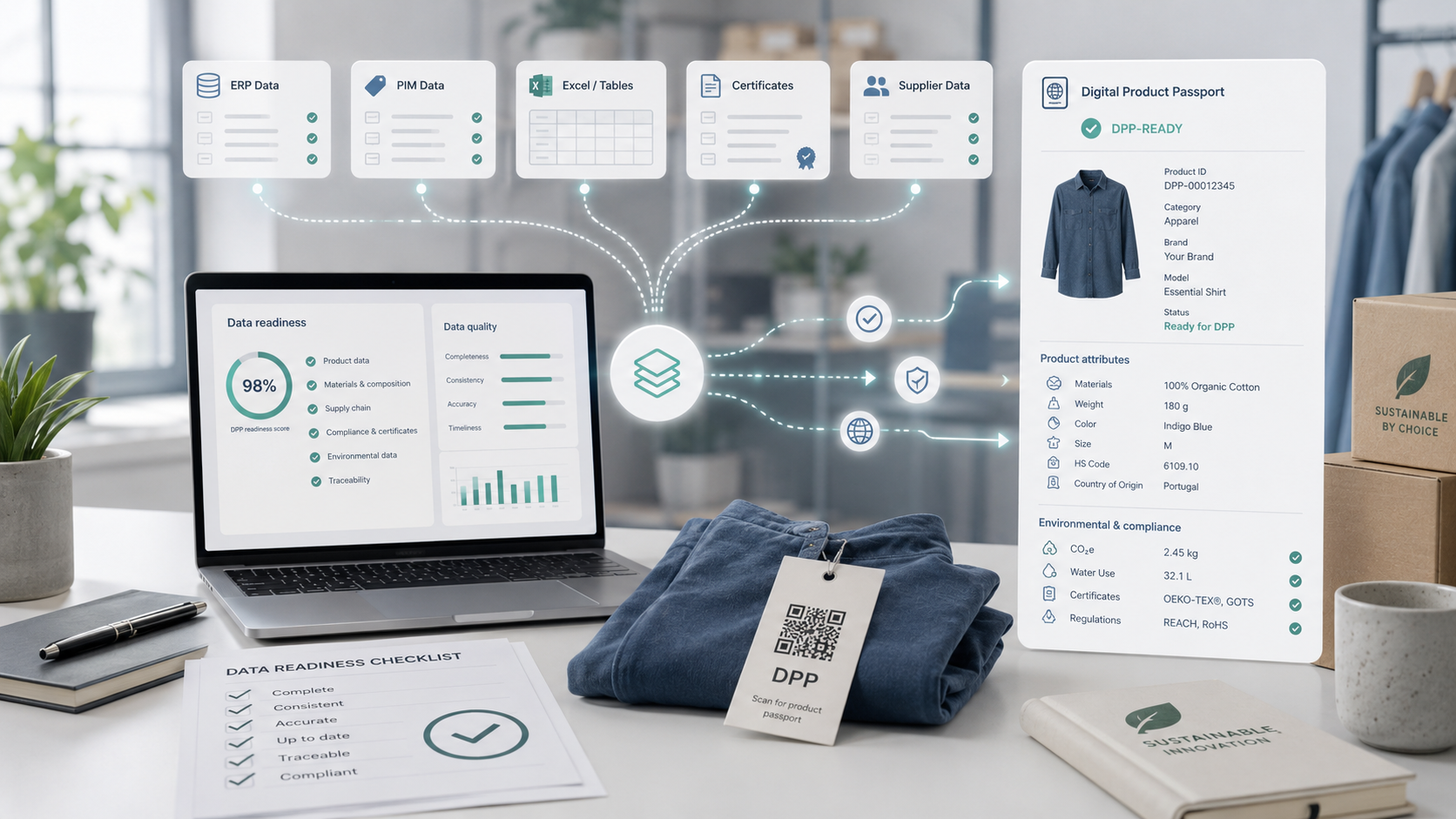
Some data is stored in the ERP system. Some is kept in Excel tables. Technical documentation is often saved in PDF documents. Certificates may be managed by the quality department. Information about materials often comes from suppliers. Product photos and descriptions may be stored in marketing, webshop or PIM systems.
The problem is not always that the data does not exist.
The problem is that the data is often scattered, structured differently and difficult to connect to a specific product.
For the Digital Product Passport, it is not enough to know that certain information exists somewhere. It is important to know where it is located, who is responsible for it, whether it is up to date and whether it can be linked to the correct product.
Five Questions to Check Data Readiness
Preparation for the DPP can start very simply. The first step is to ask a few basic questions about existing product data.
Do we have clearly defined data for each product?
Do we know where this data is located?
Is the data structured and consistent?
Who is responsible for entering, checking and updating the data?
Can data from ERP, PIM, webshop systems, Excel tables and supplier documents be connected into one coherent whole?
If a business does not have clear answers to these questions, it does not mean it is not ready for the DPP. It means that now is the right time to start preparing.
The Most Common Problems in Data Preparation
In practice, similar issues often appear during preparation for the Digital Product Passport.
Product names are not consistent across different systems. Technical attributes are incomplete or recorded in different formats. Certificates are not linked to the correct products. Supplier data arrives in different Excel files, PDF documents or catalogues. Some product information is known only to individuals within the company.
This way of working may function when the number of products is small and information is needed only occasionally. However, when a business needs to prepare data for a large number of items and maintain it over time, unorganised data becomes a serious operational challenge.
The DPP further highlights the need for a clear structure, defined responsibilities and a process for maintaining product data.
What Can Businesses Do Now?
The first step does not need to be a large implementation project. A business can begin by reviewing the current state of its product data.
It is important to choose a set of products, check which information already exists, identify which data is missing and determine where the most reliable sources are located. After that, the business can define how the data will be structured, checked and connected to a future DPP solution.
For businesses that already use an ERP or PIM system, it is important to check which data can be used from existing systems. For businesses that manage data in Excel files or documents, it is important to gradually organise it and convert it into a format that can be used for the DPP.
The goal is not to change everything immediately. The goal is to start early enough to identify problems before deadlines become pressure.
How NOS Supports Businesses in Preparing Data for the DPP
NOS helps businesses begin their preparation for the Digital Product Passport in a practical and sustainable way.
The first step is an analysis of existing data and processes. We review where the data is located, in which format it exists, which sources are the most reliable and what is missing for the creation of the Digital Product Passport.
After that, we help structure the data and define a way of working that fits the actual capabilities of the business. Depending on the needs, data can be entered manually, imported from Excel files, connected with ERP or PIM systems and supplemented with supplier data.
The goal is not to create additional administration. The goal is to help the business gain a clearer overview of its products, improve data quality and build a sustainable foundation for DPP implementation.
Conclusion
The Digital Product Passport does not start with a QR code. It starts with one important question: do we know how to manage our product data well enough?
Businesses that start reviewing and structuring their data now will be better prepared for regulatory requirements, but also for wider business digitalisation.
Organised data brings greater transparency, better product control, faster communication with partners and a stronger foundation for future digital processes.
That is why the DPP should not be seen only as an obligation. For businesses that prepare on time, it can become an opportunity for better product management and a stronger position in the market.
For collaboration and more information, feel free to contact us at