
DPP Registry: the key infrastructure of the Digital Product Passport that companies must not overlook
The Digital Product Passport is entering a new phase. After years of discussions about regulation, standards and technical requirements, the European framework is increasingly becoming concrete infrastructure that will clearly show companies what is expected of them.
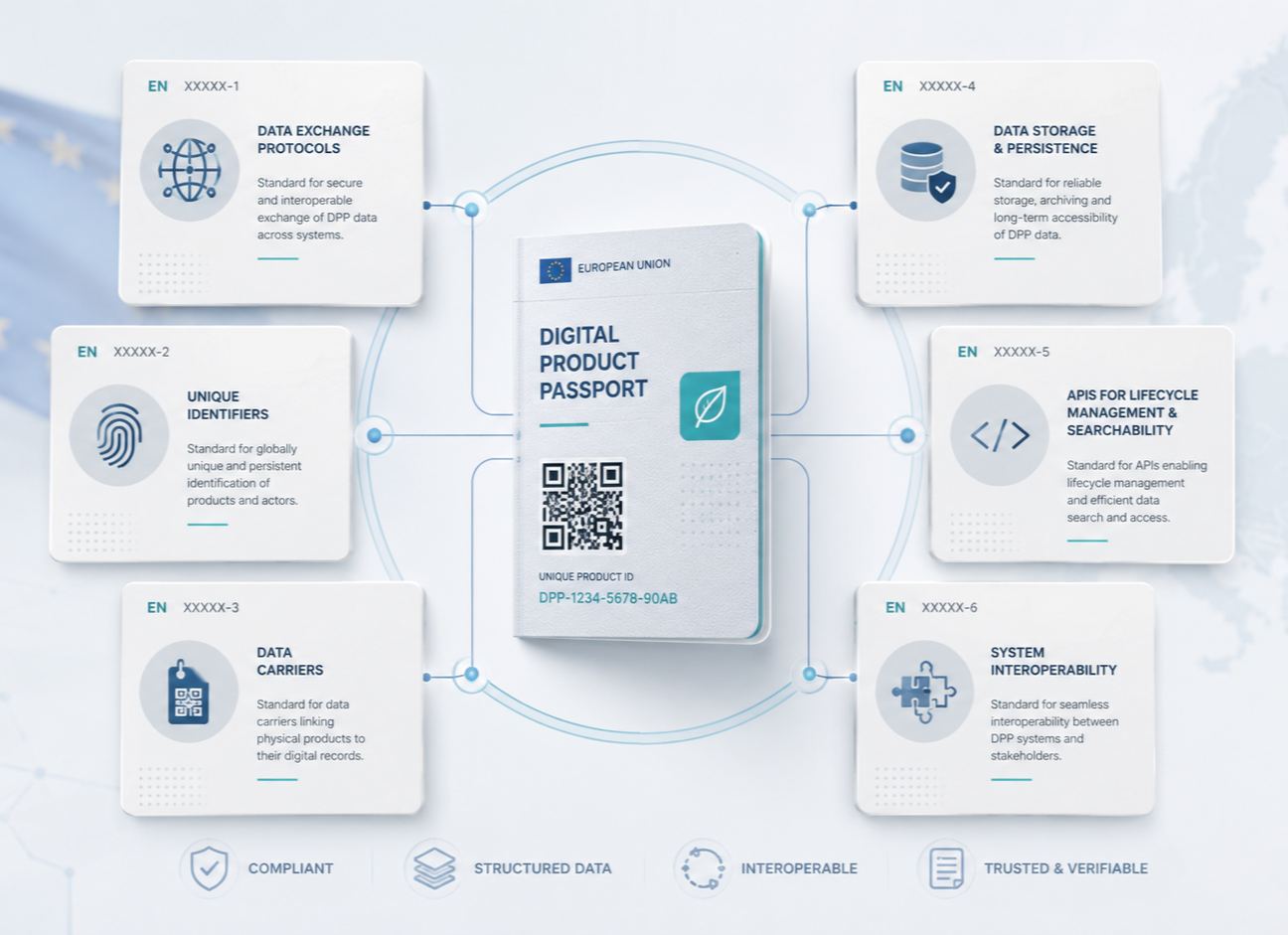
One of the most important elements of this future system is the DPP Registry, or the registry of digital product passports. Although the Digital Product Passport is often discussed through the lens of QR codes, platforms and the presentation of data to end users, the DPP Registry has a different, but very important, role. It represents part of the European infrastructure that will enable the registration, identification and verification of digital product passports at the level of the Single Market.
For companies, this means that preparation for the DPP is no longer just a matter of choosing a software solution. It is becoming a matter of data, process, responsibility and interoperability readiness. In other words, the Digital Product Passport will not work simply because the technology exists. It will work when product data is accurate, structured, connected and ready to be exchanged across different systems and stakeholders.
What is the DPP Registry?
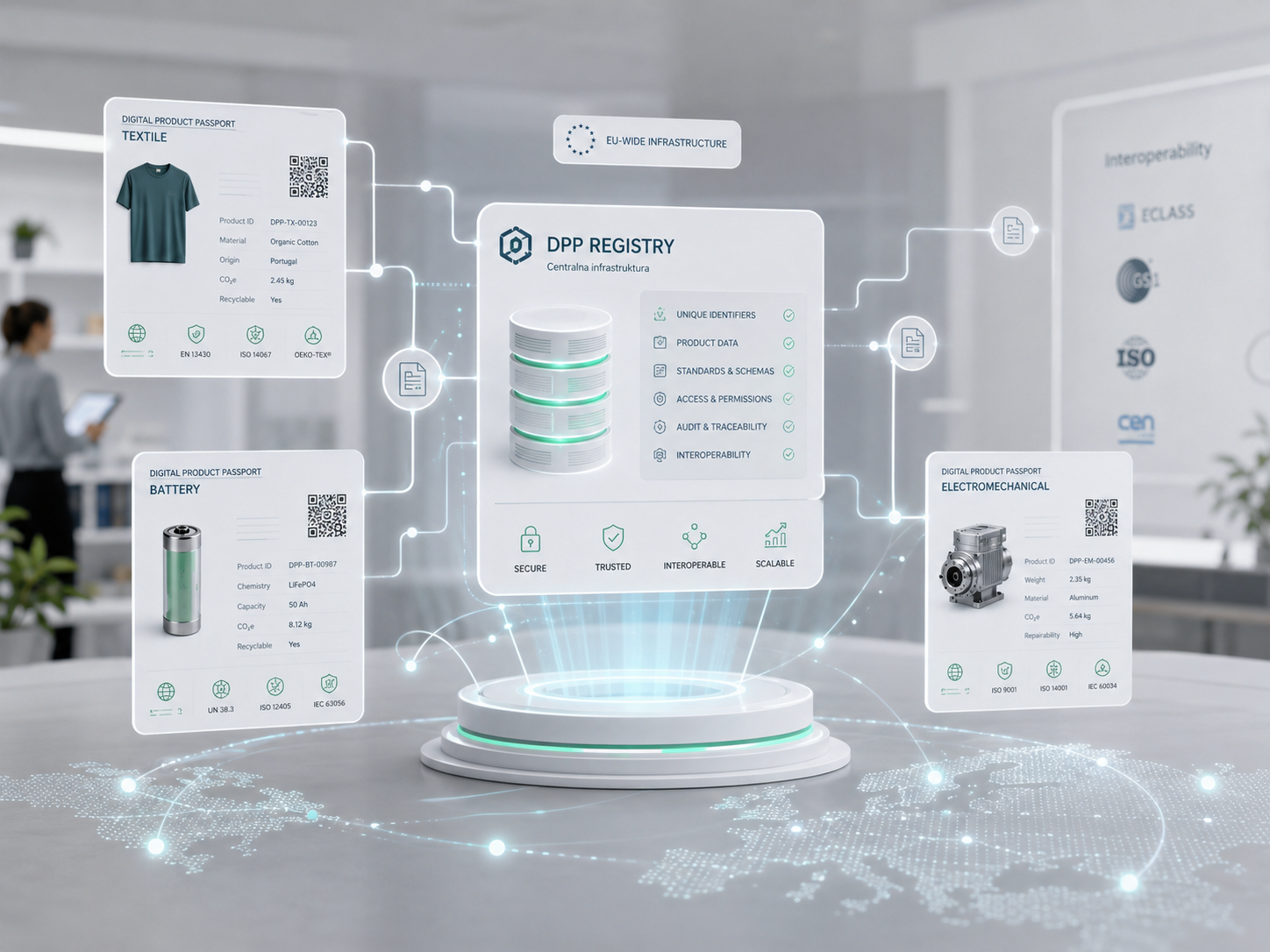
The DPP Registry is EU infrastructure intended for the registration of digital product passports. Its purpose is not to replace the Digital Product Passport itself, nor to store all product data in one place. Instead, the Registry will serve as a central mechanism for recording, identifying and linking digital passports with relevant information.
In practice, this means that the DPP Registry will support elements such as product identifiers, registration references, links to where Digital Product Passport data is located, and mechanisms that can help competent authorities, customs and market surveillance bodies verify compliance.
It is important to understand that the DPP Registry is not the same as the Digital Product Passport. The Digital Product Passport contains specific information about a product, its materials, composition, sustainability, repairability, recycling or other prescribed data, depending on the product category and applicable regulation. The Registry, on the other hand, serves as infrastructure that enables these passports to be registered, found and verified.
The DPP Registry is not a new EPREL
In discussions about the Digital Product Passport, comparisons are often made with EPREL, the European database for energy labelling of products. However, the DPP Registry should not be seen as another EPREL.
EPREL has a specific regulatory purpose and applies to products related to energy labelling. The DPP Registry is designed as horizontal infrastructure that will support different regulations and different product categories across the European market.
This is particularly important because, in the long term, the Digital Product Passport will not be limited to a single industry. The first concrete obligations will begin with certain categories of batteries, but DPP requirements are expected to gradually expand to other product groups. This is precisely why the Registry must be sufficiently flexible, interoperable and applicable across different sectors.
For companies, this means that preparation should not be based on a short-term solution for a single regulatory obligation. It is necessary to think more broadly: how to set up data and processes so they can adapt to future requirements, new product categories and new technical standards.
Why is the Registry important for companies?
The DPP Registry shows that the Digital Product Passport is moving closer to practical application. It is no longer only a question of whether the DPP will become an obligation, but how this system will be technically and operationally implemented.
For manufacturers, distributors and other economic operators, this brings several important consequences.
Firstly, companies will need to know where their product data is located, who is responsible for its accuracy and how that data is updated. If information is scattered across ERP systems, PIM tools, Excel spreadsheets, supplier documents and internal databases, preparation for the DPP can quickly become a complex project.
Secondly, data will need to be structured and aligned with the prescribed requirements. It is not enough to have product information in free text or in documents that are not connected to business processes. The Digital Product Passport requires data that is understandable, verifiable and ready for exchange.
Thirdly, companies will need to think about interoperability. If DPP data needs to function across different systems, markets and stakeholders, then it is not enough for it to simply be digitally available. It must be shaped in such a way that other systems can interpret it correctly.
Data, processes and interoperability as the foundation of preparation
High-quality preparation for the Digital Product Passport begins with an analysis of existing data. Companies first need to understand what information they already have, where it is located, in which format it exists and how reliable it is.
After that, processes need to be defined. Who enters the data? Who verifies it? When is the data updated? How are changes in the product, materials, suppliers or regulatory requirements tracked? Without clear processes, the DPP can become an additional administrative burden instead of a useful business tool.
The third important element is interoperability. In a real business environment, data rarely comes from a single system. Information is often combined from ERP systems, PIM systems, production, procurement, quality control, supplier sources and manual spreadsheets. A DPP solution must therefore be able to work with the existing environment, rather than requiring the company to change everything from the ground up.
Semantic interoperability is particularly important. It means that different systems and stakeholders are not only able to exchange data, but also understand it in the same way. This is crucial for the future DPP ecosystem because product information will need to travel through value chains, regulatory systems and markets.
Why 2026 is the year of preparation
For many companies, 2026 should be the year of preparation. Although obligations will not begin to apply to all sectors at the same time, the development of the DPP Registry shows that the infrastructure is being built rapidly.
Companies that wait until the last minute could face the problem of their data not being ready, their internal processes not being defined, or their existing systems not being able to easily support new requirements. In that case, the DPP becomes an urgent and expensive project.
On the other hand, companies that prepare earlier can gradually organise their data, test solutions, educate teams and establish a sustainable model for managing product information. This approach reduces risk, makes compliance easier and enables the DPP to become more than a regulatory obligation.
A well-established Digital Product Passport can also bring business value. It can improve transparency towards customers, facilitate communication with partners, support sustainability, simplify product information management and create a better foundation for future digital services.
How NOS approaches preparation for the Digital Product Passport
At NOS, we believe that the Digital Product Passport must be accessible to small and medium-sized enterprises, not only to large organisations with large IT budgets. That is why our approach combines business consulting, process understanding and a technological solution that can be adapted to different industries and levels of digital maturity.
Our focus is not only on creating a digital product display. The focus is on helping a company understand what data it has, what data is missing, how it can be structured and how it can be maintained over time.
We help clients assess data readiness, connect existing systems and define a practical path towards DPP implementation. This is particularly important for companies that want to start on time, but do not want to enter into unnecessarily complex and expensive projects.
The NOS solution for the Digital Product Passport is designed to be scalable, applicable across different sectors and flexible enough for a real business environment. The goal is not only to satisfy the regulation, but to enable the DPP to become a tool for better organisation, transparency and long-term competitiveness.
Conclusion
The DPP Registry is an important step towards creating a European ecosystem of digital product passports. It shows that the Digital Product Passport can no longer be viewed as a distant regulatory topic, but as concrete infrastructure for which companies need to start preparing now.
However, the infrastructure itself will not solve companies’ challenges. The key questions remain the same: is the data accurate, are the processes clearly defined, can the systems be connected and is the information ready to be exchanged through the value chain?
That is why now is the right time to prepare. Companies that organise their data and processes on time will find it easier to adapt to future requirements, avoid last-minute pressure and turn the DPP into a real business advantage.
For collaboration and more information, contact us at