
The First European Standards for the Digital Product Passport Have Been Published: What Does This Mean for Businesses?
The Digital Product Passport is entering a new phase of development. What until recently may have seemed to many businesses like a future regulatory obligation is now gaining a much more concrete technical framework.
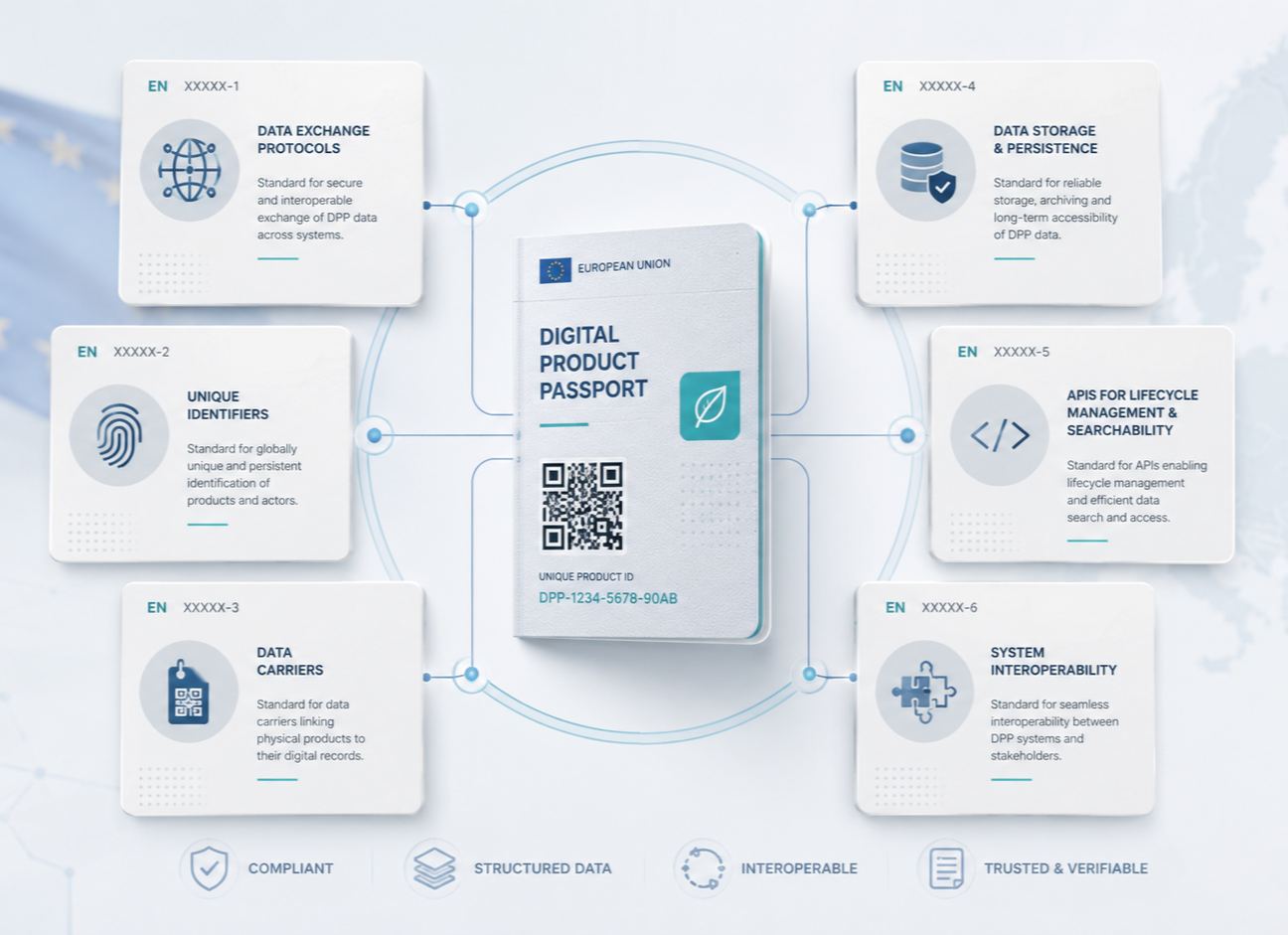
On 27 May 2026, CEN and CENELEC published the first six European standards that form an important foundation for the development and implementation of the Digital Product Passport. These standards define key technical elements of the DPP system: data exchange, unique identifiers, data carriers, data storage and data persistence, APIs, and system interoperability.
For businesses that will need to prepare Digital Product Passports in the coming years, this is an important moment.
The DPP is no longer only a matter of future regulatory compliance. It is now becoming clearer how product data will need to be connected, exchanged, stored, and made available across different systems and value chains.
What Has Actually Been Published?
The first six European standards related to the technical infrastructure of the Digital Product Passport have been published:
EN 18216:2026 refers to data exchange protocols. This is important because the DPP cannot function if different systems cannot reliably exchange information with one another.
EN 18219:2026 defines unique identifiers. This means that products, economic operators, and locations must have clear and consistent identifiers so that data can be linked to the right product and the right participant in the value chain.
EN 18220:2026 covers data carriers, such as QR codes or other forms of labelling that connect the physical product with its digital passport.
EN 18221:2026 refers to data storage, archiving, and data persistence. This is especially important because information in the DPP must remain available over time, even when the product is in different stages of its lifecycle.
EN 18222:2026 defines APIs for managing the lifecycle of the Digital Product Passport and its searchability.
EN 18223:2026 refers to system interoperability, meaning the ability of different systems, data models, and organisations to work together in a coordinated and understandable way.
Although the names of the standards are technical, their message for businesses is very concrete: the Digital Product Passport will not be just a digital card with basic information. It will be part of a wider data exchange system.
Why Are Standards Important for Businesses?
One of the biggest challenges of the DPP is interoperability. In other words, data must be understandable and usable across different systems, partners, suppliers, regulators, and end users.
If every company collects data in its own way, uses its own formats, and stores information in disconnected systems, the DPP cannot fulfil its purpose. In that case, the digital passport becomes just another document, rather than a real tool for transparency, traceability, and the circular economy.
Standards help establish common rules. They define how data is exchanged, how a product is identified, how information is accessed, and how different systems can communicate with each other.
For businesses, this means that preparation for the DPP cannot stop at the question: “Do we have a QR code?”
The real question is: do we have data that is structured, accurate, accessible, and ready to be connected with other systems?
The Biggest Challenge Will Not Be Technology Alone
The publication of the standards is an important step, but it does not mean that implementation will automatically be simple for businesses.
For many organisations, the biggest challenge will not be only the selection of a technical solution. The challenge will be data preparation.
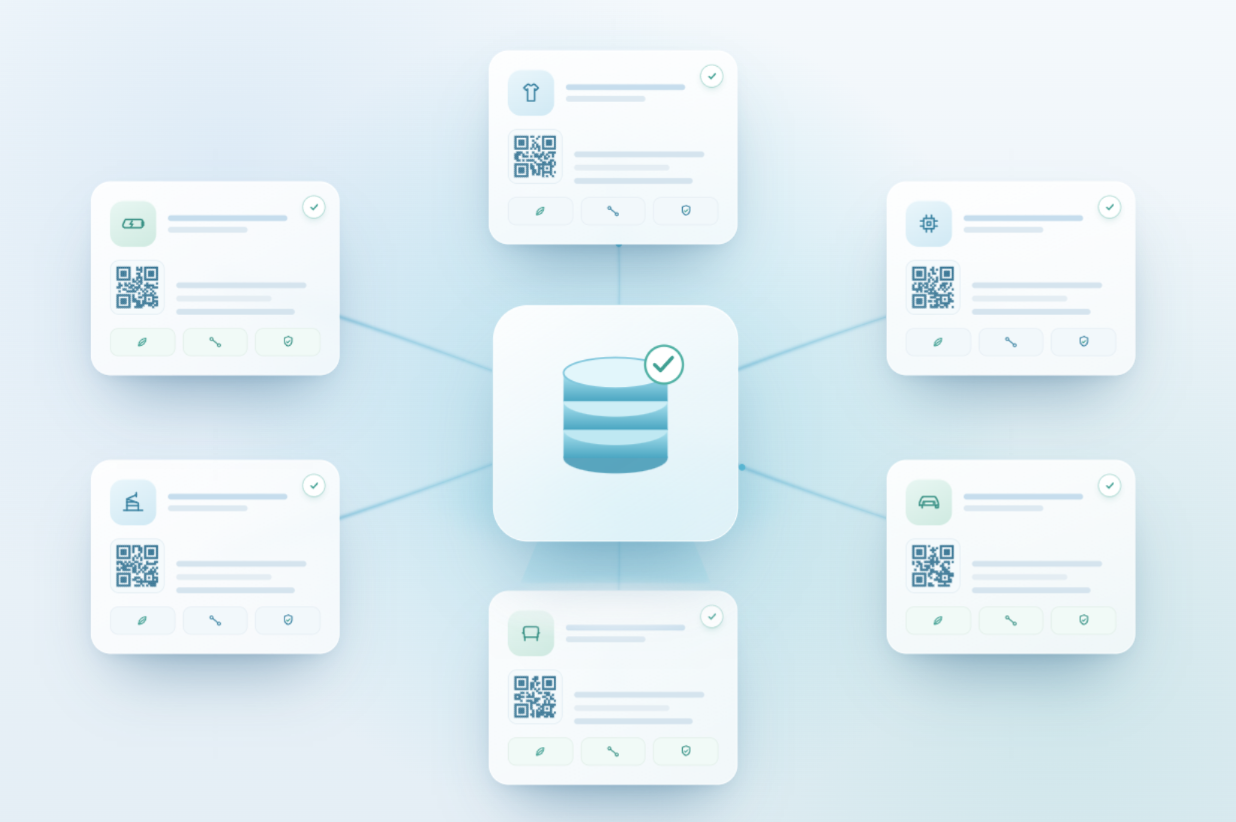
Product data is often spread across multiple departments and systems. Some data is stored in the ERP system. Some is kept in Excel files. Technical documentation may be stored in PDF documents. Certificates may be managed by the quality department. Information about materials often comes from suppliers. Product photos and descriptions are frequently held by marketing or webshop teams.
For the DPP, it is not enough for this data to exist somewhere. It must be possible to find it, verify it, connect it, and maintain it.
That is why the publication of the standards further highlights the need for businesses to start working on their internal data organisation now.
What Should Businesses Do Now?
The first step does not necessarily need to be a large implementation project. The first step is to review the current situation.
A business needs to know which products it wants to include, what data it already has about them, where that data is located, who is responsible for it, and which data is missing.
After that, it is important to assess whether the existing data is suitable for the DPP. Are product names consistent? Do technical attributes exist? Are certificates linked to the correct products? Is supplier data structured? Can data from ERP, PIM, webshop systems, or Excel files be connected into one coherent whole?
Only when a business understands its own data can it choose the right implementation approach.
The DPP standards clearly show that, in the long term, the ability to connect systems, exchange data, and maintain information throughout the entire product lifecycle will be essential.
DPP as an Opportunity, Not Just an Obligation
Although the Digital Product Passport is driven by regulation, its value for businesses can be much broader.
Businesses that organise their data on time will gain better control over their products, faster access to documentation, clearer communication with customers and partners, and a stronger foundation for the digitalisation of their operations.
The DPP can support sales, procurement, quality, production, sustainability, and management teams. When data is structured and accessible, it becomes easier to respond to market demands, regulatory requirements, and business partner expectations.
The standards that have now been published further confirm that the DPP will not be an isolated solution. It will be part of a broader digital infrastructure in which data must be connected, reliable, and interoperable.
How NOS Supports Businesses in Preparing for the Digital Product Passport
NOS helps businesses begin their preparation for the Digital Product Passport in a practical and sustainable way.
Our approach does not start with technology alone, but with the actual situation within the business. First, we analyse existing data sources, workflows, and processes related to products. Then, we help define which data is needed for the DPP, where it is located, what is missing, and how it should be structured.
Depending on the needs of the business, data can be entered manually, imported from Excel files, connected with ERP or PIM systems, and supplemented with supplier data.
The goal is not to create additional administrative burden. The goal is to enable the business to manage product data in a clear, sustainable, and scalable way.
The publication of the first European DPP standards shows that the market is moving towards concrete implementation. Businesses that start preparing on time will face less pressure, have higher-quality data, and build a stronger foundation for meeting future requirements.
The Digital Product Passport is no longer only a topic for the future. The technical framework is beginning to take shape, and businesses that start preparing now will be better ready for the changes ahead.
For collaboration and more information, feel free to contact us at: