
Digital Product Passport for Small and Medium-Sized Enterprises: How to Get Started Without a Heavy IT Burden
The Digital Product Passport is becoming one of the most important changes coming to the European market. As 2027 approaches, it is becoming clear that DPP is no longer a topic reserved only for large manufacturers, regulators, or international corporations.
This change is gradually becoming relevant for small and medium-sized enterprises as well.
For many of them, the first question is no longer “What is a Digital Product Passport?”, but something far more practical: how can we get started without turning the whole project into a major IT burden, additional administration, and a cost that is difficult to justify?
The good news is that preparing for DPP does not have to begin with a large system, complex integration, or a complete change in the way a company operates. For most businesses, the first step is much simpler: understanding which product data already exists, where it is stored, and how it can gradually be turned into a structured Digital Product Passport.
DPP is not reserved only for large companies
When people talk about the Digital Product Passport, it can often sound like a large technology project that requires advanced IT teams, expensive systems, and long implementation timelines. This can discourage small and medium-sized businesses, especially those that still manage a large part of their product information through Excel files, folders, PDF documents, or simpler business applications.
However, DPP should not be seen only as an obstacle. Its real value lies in making product information accessible, understandable, and useful throughout the product lifecycle.
This may include information about materials, composition, technical characteristics, maintenance, repairability, recyclability, certificates, origin, and other data depending on the industry and product type.
For small and medium-sized enterprises, this means that DPP preparation does not need to be treated as one large, one-time project. It can be approached as a gradual process of organising, improving, and connecting product data.
The biggest challenge is often not technology, but data organisation
In practice, many companies already have a significant part of the data they will need for the Digital Product Passport. The problem is that this data is often not stored in one place.
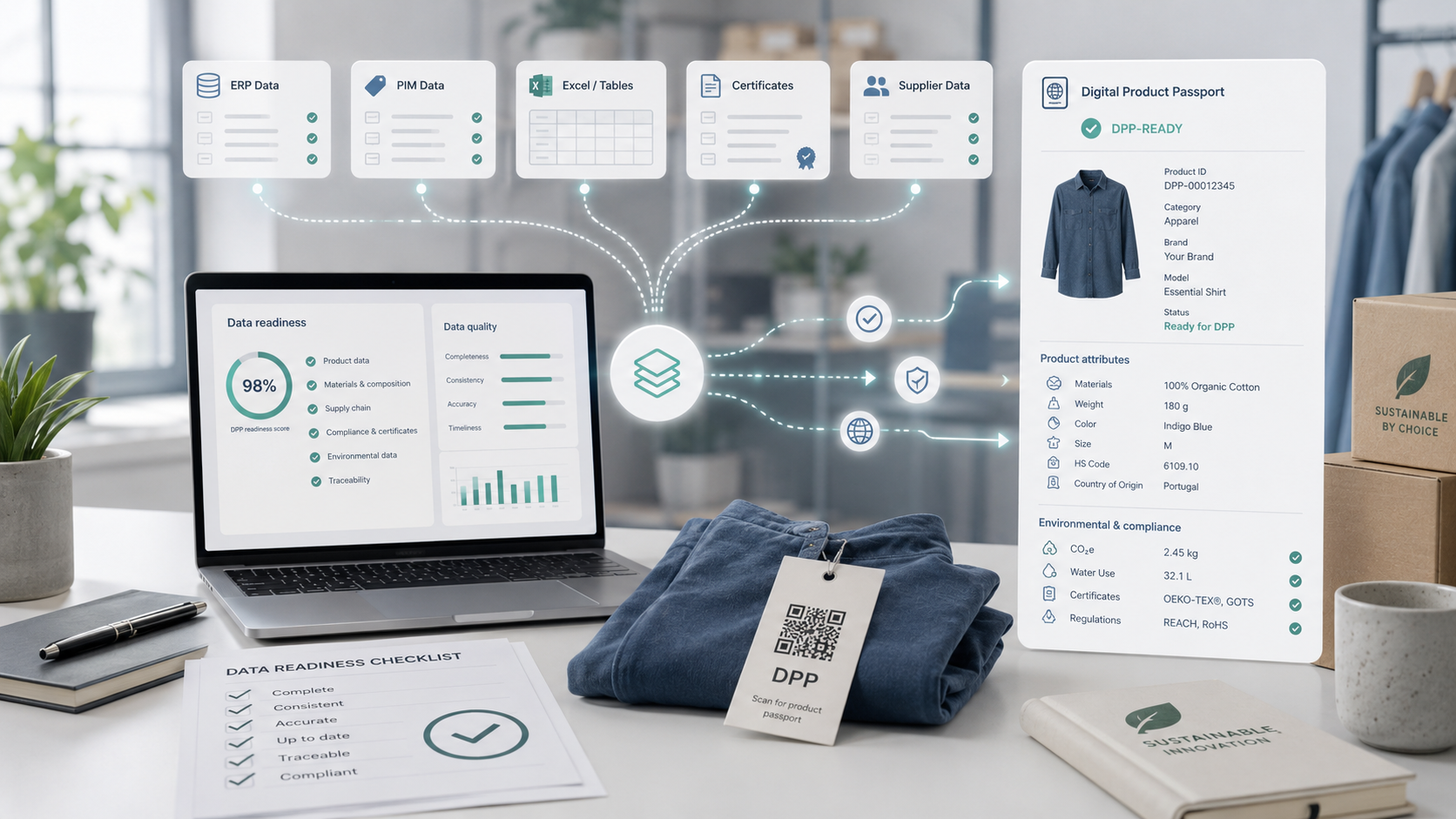
Basic product information may be in the ERP system. Technical documentation may be stored in PDF files. Certificates may be managed by the quality department. Material data may come from suppliers. Product images may be handled by marketing. Maintenance instructions or user guides may exist in separate documents.
Each of these sources has value on its own, but for DPP, the important part is connecting them into a clear and usable whole.
This is why preparing for the Digital Product Passport should not be reduced only to the question “Which software should we use?”. The real question is: do we know where our product data is, who is responsible for it, and whether it is reliable enough to be shared with the market, partners, and end users?
Only when a company has a clear answer to that question does technology become a tool that simplifies the process instead of creating an additional burden.
How SMEs can get started without a heavy IT burden
The first step does not have to be complex integration. In many cases, it is enough to start with a basic overview of existing products and product data.
This means defining which products should be included, which information already exists, what is missing, and which data sources are the most reliable. After that, the data can gradually be structured and prepared for entry into a DPP solution.
For companies that do not have advanced IT systems, it is important that the solution allows simple data entry, Excel import, and a clear overview of products. For companies that already use ERP or PIM systems, it is important to enable connection with existing data sources without unnecessary duplication of work.
In both cases, the goal is the same: to avoid entering the same information manually in several places and to create a system that can be upgraded as regulations and business needs evolve.
This is especially important for small and medium-sized enterprises in traditional industries, where product data is often managed through Excel files, PDF documents, supplier declarations, and internal records.
DPP as an opportunity for better product control
Although the Digital Product Passport is most often discussed from a regulatory perspective, companies that prepare on time can also gain very concrete business benefits.
Well-structured product data supports sales, procurement, marketing, quality management, production, and management teams. When information is available, structured, and up to date, it becomes easier to respond to requests from customers, partners, distributors, and regulators.
DPP can help a company find documentation faster, present product advantages more clearly, reduce dependence on individual employees who “know where everything is”, and create a stronger foundation for future digital processes.
For small and medium-sized enterprises, this can be particularly valuable. They often do not have large teams, which is exactly why a good system can significantly simplify everyday work.
How NOS helps companies prepare for DPP
NOS approaches the Digital Product Passport from both a business and technology perspective. This means that the process does not start immediately with software, but with understanding the company’s actual situation.
The first step is an analysis of existing data: which information already exists, where it is stored, in which format, and what is missing for the creation of a Digital Product Passport.
After that, NOS helps the company structure its data and define a way of working that is practical and sustainable. Depending on the company’s needs and level of digital maturity, data can be entered manually, imported from Excel files, or connected with existing ERP and PIM systems.
The goal is not to create a complicated system that additionally burdens employees. The goal is to enable the company to manage the data required for DPP in a simple, clear, and sustainable way.
The NOS DPP solution is designed to support different industries and different levels of digital readiness. This is especially important for small and medium-sized enterprises that want to start on time, but do not want to enter into unnecessarily large and expensive projects.
Why companies should not wait until the last minute
As 2027 approaches, companies that wait until the last moment may find themselves under pressure. The challenge will not only be choosing a solution, but also collecting, checking, and structuring product data.
Product data cannot be properly organised overnight, especially if it comes from multiple departments, suppliers, or different documents.
That is why now is the right time to take the first step. Not everything has to be perfect immediately. What matters is starting early enough to review existing data, identify gaps, and set up a process that can be maintained in the long term.
The Digital Product Passport does not have to become a major burden for small and medium-sized enterprises. With the right approach, it can become an opportunity for better data organisation, greater transparency, and stronger readiness for the European market.
Companies that prepare on time will not only meet a regulatory requirement. They will also gain better control over their products, clearer information for customers, and a stronger foundation for future business.
For collaboration and more information, contact us at: