
Digital Product Passport: From Regulatory Obligation to Business Advantage
As 2027 approaches, the Digital Product Passport is increasingly being discussed as a new requirement for companies that want to place their products on the European Union market. However, companies that see the DPP only as another regulatory obligation may miss its broader business value.
The Digital Product Passport is not just a digital record accessed by scanning a QR code. It represents a new way of managing product data, including product composition, origin, sustainability, repairability, reusability and recyclability.
That is why the DPP can become much more than a compliance requirement. It can become a tool for greater transparency, better data organisation and stronger trust among customers, partners and the market.
DPP Starts with High-Quality Data
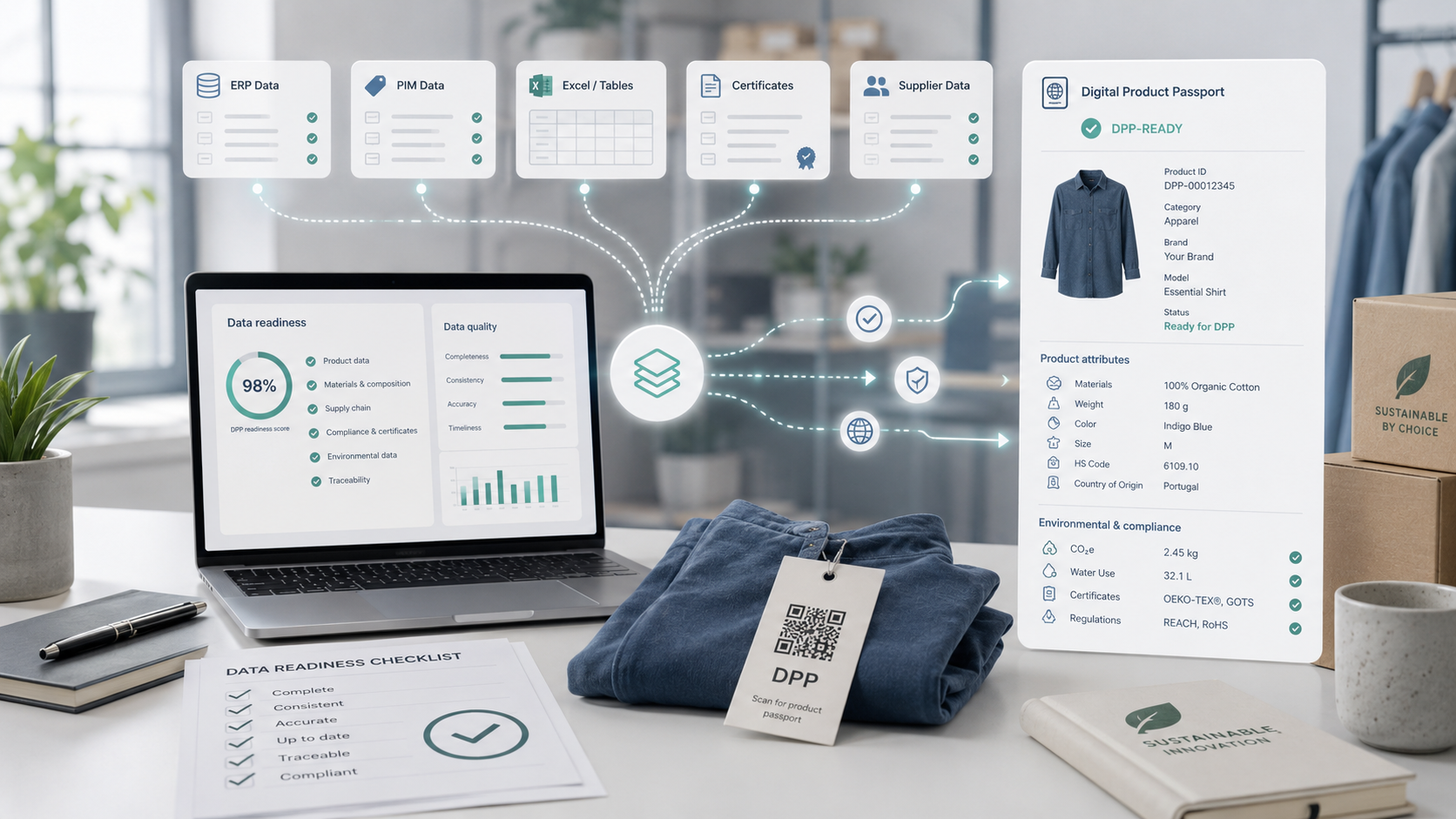
Many companies already have a large share of the data they will need for the Digital Product Passport. This data can be found in ERP systems, technical documentation, Excel spreadsheets, certificates, supplier documents or internal databases.
The problem is that this data is often not connected, structured or easily accessible. One part of the information may be held by procurement, another by production, another by suppliers, and another in documents that are difficult to find and update quickly.
That is why preparation for the DPP does not begin with a QR code, but with a key question: do we know where our product data is located, and can we trust it?
From Compliance to Competitive Advantage
The Digital Product Passport introduces the obligation for greater transparency, but it also gives companies an opportunity to turn that transparency into an advantage.
When product data is accurate, accessible and clearly structured, companies can demonstrate regulatory compliance more easily, respond faster to customer and partner requests, and manage documentation more efficiently. At the same time, this data can support other business needs, from sustainability reporting to better product management and market communication.
Customers and business partners increasingly expect clear information about the products they buy, use or distribute. Companies that establish a quality data system on time will be better prepared not only for regulatory requirements, but also for a market that increasingly values transparency and responsibility.
Why Companies Should Not Wait Until the Last Moment
Although 2027 may still seem far away, preparing for the Digital Product Passport takes time. The most demanding part is not the technology itself, but the collection, verification and organisation of data.
If a company starts looking for information about materials, suppliers, technical characteristics, certificates and product sustainability only at the last moment, implementation can become a slow and burdensome process.
On the other hand, companies that start earlier can gradually analyse their existing data, identify gaps and introduce a system that adapts to their products, processes and industry.
How NOS Supports Companies in Preparing for the DPP
NOS helps companies introduce the Digital Product Passport in a practical, understandable and business-oriented way.
Our approach does not start by overcomplicating the regulation, but by analysing the current situation: what data you already have, where it is located, what is missing and how it can be transformed into a structured digital record ready for the DPP.
The solution enables product entry and management, organisation of key data and generation of digital product passports that can be adapted to different industries and levels of digital readiness. In this way, the DPP does not become an additional administrative burden, but a tool that supports better business organisation.
The Time to Prepare Is Now
The Digital Product Passport is changing the way product data is collected, shared and used throughout the entire product lifecycle. Companies that start on time will gain a clearer overview of their data, a simpler implementation process and a stronger position in the market.
The DPP is not only a regulatory obligation that must be fulfilled. It is an opportunity for companies to build a better, more transparent and future-ready product data management system.
For collaboration and more information, contact us at: